Presentation
AI Eats The World
Analysis of Benedict Evans' Thesis
Platform Shifts
Every 10–15 years, a platform shift reshapes technology. We are currently living through the deployment phase of Generative AI, marked by massive capital expenditure, uncertainty, and the search for value.
I'm riffing on former a16z Partner Benedict Evans' 2025 update, AI eats the world.
The Next Platform Shift
We have seen this pattern before. Mainframes, PCs, the Web, and Smartphones each represented a sigmoid curve of adoption. Now, Generative AI attempts to start a new curve. However, unlike previous shifts where we knew the physical limits (screen size, bandwidth), we do not yet know the ceiling of LLM capability.
What happens in a platform shift?
Who is affected, and how much?
The New Thing!
All tech innovation, investment and company creation switches over
Inside tech
New gatekeepers,
new value capture
New and bigger markets
Outside tech
Is this a new tool, new revenue, or an existential threat?
Dominance in one era does not guarantee survival in the next. Microsoft dominated the PC era with a 90%+ share of computing, but when the center of gravity shifted to smartphones, its share of total computing devices collapsed.

Window Pains
Microsoft OS share of global computer unit sales
Furthermore, early leaders often disappear. The "first" to market was not the winner in PCs, browsers, search, social, or smartphones. We should expect similar turbulence in the AI model layer.
Send in the Clones
Global PC unit sales share
How will the new thing work? We don't know
For every new platform, we forget how many ideas failed and how unclear everything was.
Internet
AOL, Yahoo,
Pointcast, Flash,
plugins, portals...
Sun? Netscape?
Mobile internet
i-mode, J2ME, WAP,
mesh, DVB-H,
keyboards...
Nokia? RIM?
Generative AI?
Browsers? Agentic?
Voice? MCP?
Wearables? GEO?
Similar to how the internet eventually became the default medium for meeting partners, AI adoption may follow a slow-then-explosive trajectory.
When things are exciting, people get excited. This often leads to bubbles.
But when the dust settles, the world has changed
Love at First Site
US heterosexual couples who met online, by year of meeting
The internet has gone from the New Thing to a basic part of daily life.
New platforms mean new tools (and new revenue)
SaaS means the typical large enterprise in the USA now uses 4-500 apps
Mainframes
One app
PCs
Dozens of apps
SaaS
4-500 apps*
LLMs
What can we automate next?
One way this platform shift is different, though
For PCs, the web or smartphones, we knew the physical limits of what could happen next year
With LLMs, we don’t know how much better this could get 🤯
“The race to AGI is afoot”
— Sergey Brin
The AI Stack
Competition is heating up among nine top makers of artificial intelligence and related hardware as they expand their product lines. Highlighted cells show new entries since last year.
Another platform shift, or more?
We know this will get better, but we don’t know how much
So how will the new thing turn out?
If this is ‘only’ as big as mobile or the internet, that seems like enough
How will this work?
How will this be useful?
Where is the distribution, value capture, and value destruction?
The Capex Boom
The race for AGI has triggered an investment cycle without precedent. The "Big 4" (Microsoft, Meta, Alphabet, Amazon) are projected to spend over $330 billion in 2025 alone on AI infrastructure. This level of spending is driven by FOMO and the existential threat of missing the next platform.
"The risk of under-investing is significantly greater than the risk of over-investing."
— Sundar Pichai, Q2 2024
FOMO drives a capex surge
~$400bn in 2025 for the big four alone (for comparison, global telecoms is ~$300bn).
Moore Money, Moore Problems
Big Tech Capex ($bn)
Those four companies alone are expected to devote more than $380 billion combined to capital expenditures in their current fiscal years, with most going to chips, servers and other data center-related expenses. That’s a more than 1,300% jump from a decade ago. And they’ve all pledged to spend significantly more in the year after that.
"The very worst case would be that we have just pre-built for a couple of years."
— Mark Zuckerberg, Q3 2025
A new investment cycle
This spending is reshaping the physical world. In the US, construction spending on data centers is rapidly approaching spending on office buildings.
Cloud formations
US construction value (2025 $bn, seasonally adjusted annual rate)
Nvidia can’t keep up
While Nvidia is leading the AI chip market, it can’t keep up with the demand. They're trying to build a new Sun Microsystems (though China and the hyperscalers’ own chip designs are coming up close behind).
Intel Outside
This demand flows to one bottleneck: Nvidia. While Intel struggles to maintain relevance, Nvidia's revenue has exploded, decoupling entirely from traditional semiconductor cycles.
TSMC can't keep up either
TSMC is unwilling (or unable) to expand capacity fast enough to meet Nvidia's book of business.
Feeling Fab-ulous
Company Quarterly revenue ($bn)
The Constraints
We are seeing wild estimates for future capacity. Some forecasts suggest we will need to triple global data center capacity by 2030, costing trillions of dollars. However, real-world constraints like power, chips, and permits are becoming major bottlenecks.
Power
Utility power availability is now the primary bottleneck
Chips
Demand flows to one bottleneck: Nvidia
Permits
Real-world constraints are becoming major bottlenecks
Utility power availability is now the primary bottleneck in the US, where power demand growth has historically been flat (around 2%) but is now spiking due to AI.
US power backlogs becoming a major issue
US power demand growth is ~2%, and AI might add 1% that’s hard to build fast (this is not an issue in China)
Plug and Pray
Main constraints to data centre construction, USA (February 2025)
"It’s been almost impossible to build capacity fast enough since ChatGPT launched"
— Kevin Scott, Microsoft CTO
Current Affairs
Data centers consuming more than 25 gigawatts of electricity were under construction this year, with facilities using another 128 gigawatts in planning. If all are built, they could use almost three times California's peak electric demand.
Data centre capacity triples?
Some very large numbers (although some of these ‘bragawatts’ may be more performative than real).
Global data centre capacity estimates, H1 2025 (GW)
“Three trillion dollars!”
Annualised AI capex aspirations are a similar magnitude to mature global capital-intensive industries
Global telecoms
~$300bn
Oil & gas ‘upstream’
~$540bn
US private sector
~$4.1tr
GenAI
$500-750bn annual?
The hyperscalers can afford it…
The hyperscalers have massive cash flows, which generally cover their capital expenditures.
Annual Capex and Free Cash Flow, 2010 to 2025 ($bn)
… up to a point
However, when we include leases, the total burden is much higher, especially for Amazon and Microsoft. Capital leases are not new, but they’ve grown much larger.
Annual Capex and Free Cash Flow, 2010 to 2025e ($bn)
Hyperscalers add leases and debt, while some analysts suggest Oracle’s cloud capex might be >100% of revenue.
Circular Revenue
Without its own cashflows, OpenAI partners with Nvidia, Oracle, Softbank, and petrodollars.
OpenAI is buying Nvidia chips with Nvidia's cashflow…
Which comes from the hyperscalers…
and using Nvidia's cash to turn AMD into an Nvidia competitor, and pay Broadcom to make its own chips…
Mutual Dependencies
Major AI firms and cloud providers are increasingly relying on one another by striking interlocking deals involving cash, servers, AI models and chips
Yes, but where has all this money got us?
After three years, lots more science and engineering, but no real clarity on the shape of the market
Models still improving
Far more models, China, OSS
Lots of new acronyms
No apparent moats
No clarity on product or value capture
Every week introduces new models, new (problematic, gamed, and saturated) benchmarks, new acronyms.
Model Proliferation
Meanwhile, the models themselves are converging. On general benchmarks, the gap between the leading model and the followers is shrinking, suggesting that raw intelligence might become a commodity.
Models converge and leaders change weekly
Dozens of (saturated) benchmarks to choose from, but on the most general, the leaders are very close.
Tech versus brand versus distribution?
The models may be close to commodities (especially for general use), but market position is not, so far.
Look Who’s Talking
Weekly active users of generative AI tools as share of the population
Adoption is also uneven globally. The US leads significantly in the usage of generative AI tools, while developed markets like Japan lag significantly behind.
Everyone is already using this!
3. Usage and Adoption
Despite the hype, we are early. ChatGPT has roughly 800 million weekly active users, but usage intensity varies. Surveys suggest that for many, AI is a "sometimes" tool rather than a daily habit.
Talk is cheap
ChatGPT global weekly active users (millions)
New tools like Cursor are seeing explosive growth, challenging traditional IDEs.
Point and click
Cursor Growth (ARR $m)
Still more experimentation than daily use
So far, many more people use chatbots occasionally than make them part of their daily lives.
How many people use generative AI chatbots in the USA?
Most data shows the same picture
Surveys are early, scattered and inconsistent, but an engagement gap seems clear.
How many people use generative AI chatbots in the USA?
Is this just early? Or a harder problem?
Why do most users of ChatGPT only use it a little bit?
People don’t know what they want until you show it to them.
You’ve got to start with the experience and work backwards to the technology
— Steve Jobs
Weekly
Usage is climbing, but is it a daily habit?
Daily
Remains a smaller fraction of total usage
Invisible
The technology becomes essential for everyone
When the dust settles, however, new technologies fundamentally change society. The internet went from a novelty to the primary way couples meet, displacing friends and family.
How Couples Meet
So where does a model lab compete?
Where is the value capture for a research-heavy, capital-intensive commodity?
Go down the stack
Win on scale?
(see: aircraft,
AWS, chips)
If the models are commodities?
And don’t have
network effects?
Go up the stack
Win on network
effects & product?
(See: software)
Microsoft's shift away from network effects?
From competing on network effects to competing on access to capital?
Microsoft's capital intensity is spiking as it builds out the infrastructure for this new era.
Excel-eration
Microsoft capex/sales
For OpenAI, “yes!” to everything
Everything, everywhere, yesterday (on other people’s balance sheets), before the market slips away
Infra deals
with Oracle,
Nvidia, Intel,
Broadcom,
AMD...
Ecommerce
integrations,
ads, vertical
data sets
App platform,
social video,
web browser
Robots
Jony Ive
Biotech
Automation and Unbundling
AI is often described as "infinite interns." This leads to the Jevons paradox: as the cost of intelligence drops, we will consume vastly more of it. We saw this with the steam engine, and we saw it with retail automation.
Steam Engine
Jevons paradox: efficiency increases consumption
Retail
Automation allowed handling 5x more SKUs
Infinite Interns
As cost of intelligence drops, we consume vastly more
We are also seeing the unbundling of software. Startups are flooding into every vertical, attempting to unbundle Excel, Google, and traditional SaaS using AI.
The coming wave of AI startups trying to unbundle Google, Excel, email and Oracle… and ChatGPT.
Artificial Selection
Y Combinator startups by field
AI coding as the new AWS
“Vibe coding” as the new abstraction layer, after AWS, libraries, operating systems…
A new step change reduction in software creation costs.
How do you know what to automate?
Step one: ask your local systems integrator.
Accenture reported new quarterly ‘generative AI’ contracts ($m)
How do you know what to automate?
Step two: buy some SaaS from Dr Evil.

Palantir quarterly revenue by segment ($m)
Pilots come first and deployment takes time
“Agentic!’ is 2025’s buzzword, but deployment takes longer
Pilots vs Deployment
Not everything works? Welcome to tech
“Why did our AI pilot fail?” That’s a CTO question, not an AI question.
Security,
privacy, IPR,
error rates,
legal
Data
integration
& legacy
systems
Finding the
right solution
for the right
people
The same
issues as
deploying any
new tech
The future can take time
A quarter of CIOs have launched something - but 40% don’t plan anything until at least 2026
CIO expected timing for first LLM projects in production, September 2025
But the future always takes time
Cloud is old and boring - but still only 30% of workflows.
Enterprise workloads in public cloud
Sometimes ‘automation’ alone is a big deal
Automation also allows us to handle complexity. The introduction of barcodes in the 1970s allowed supermarkets to handle 5x more SKUs than before.
Counter Intelligence
Average SKUs per supermarket, USA
What next?
What comes after automating the obvious, easy things?
AI gives you infinite interns
How do we use automation that makes ‘mistakes’?
We have no indication that error rates will go away, so where’s the human in the loop?
Do ‘errors’ matter?
Can you automate verification?
Is human verification efficient?
How much do we need to wrap the LLM in software?
300m interns? Jevons paradox at work
In 1865, William Stanley Jevons first described a paradox. He maintained that more efficient steam engines would not decrease the use of coal in British factories but would actually increase it. As the fossil fuel became cheaper, demand for the resource would grow, leading to the construction of more engines.

Satya Nadella
@satyanadella
Jevons paradox strikes again! As AI gets more efficient and accessible, we will see its use skyrocket, turning it into a commodity we just can't get enough of.
1.6K
The paradox applies to various technological shifts. For example, Los Angeles had 10,000 horses in 1900, but by 1950, there were 1 million cars. Similarly, despite the rise of fuel-efficient and electric vehicles, total miles driven has increased, and energy-efficient computers have led to widespread smartphone use and data centers that now consume 1.5% of global electricity.
Steam engines gave Britain the equivalent labour of (very roughly) 5x its total population by 1900.
Full Steam Ahead
UK population and steam engine labour unit equivalent (m)
Where’s the human in the loop?
All recommendation systems today work by driving, capturing and analysing user activity.
Pre-internet
Human editors, for both retail & media
Physical assets as moat
Internet
All of us are mechanical turks feeding algorithms
Network effects as moat
GenAI?
Can an LLM do this better?
Can an LLM do it without needing a user base?
Value to capture!
Brands spend a trillion dollars a year to talk to consumers - plus rent, shipping, marketing, returns…
Global ad revenue, 2024 ($bn)
New Paradigm "Half of AI will be turning three bullet points into 300 ads, and the other half…"
Old Paradigm “Half of AI will be turning three bullet points into emails, and the other half will be turning emails into three bullet points.”
This is still early days
Search
Current dominant model for finding products
Social
Discovery driven by social graphs and feeds
AI Agents
Promise to disrupt how products are found and bought
We are seeing AI used primarily to expand capabilities and test new ideas, rather than to replace existing processes.
Search History
US consumer search preference (September 2025)
The web has been dying since 1997
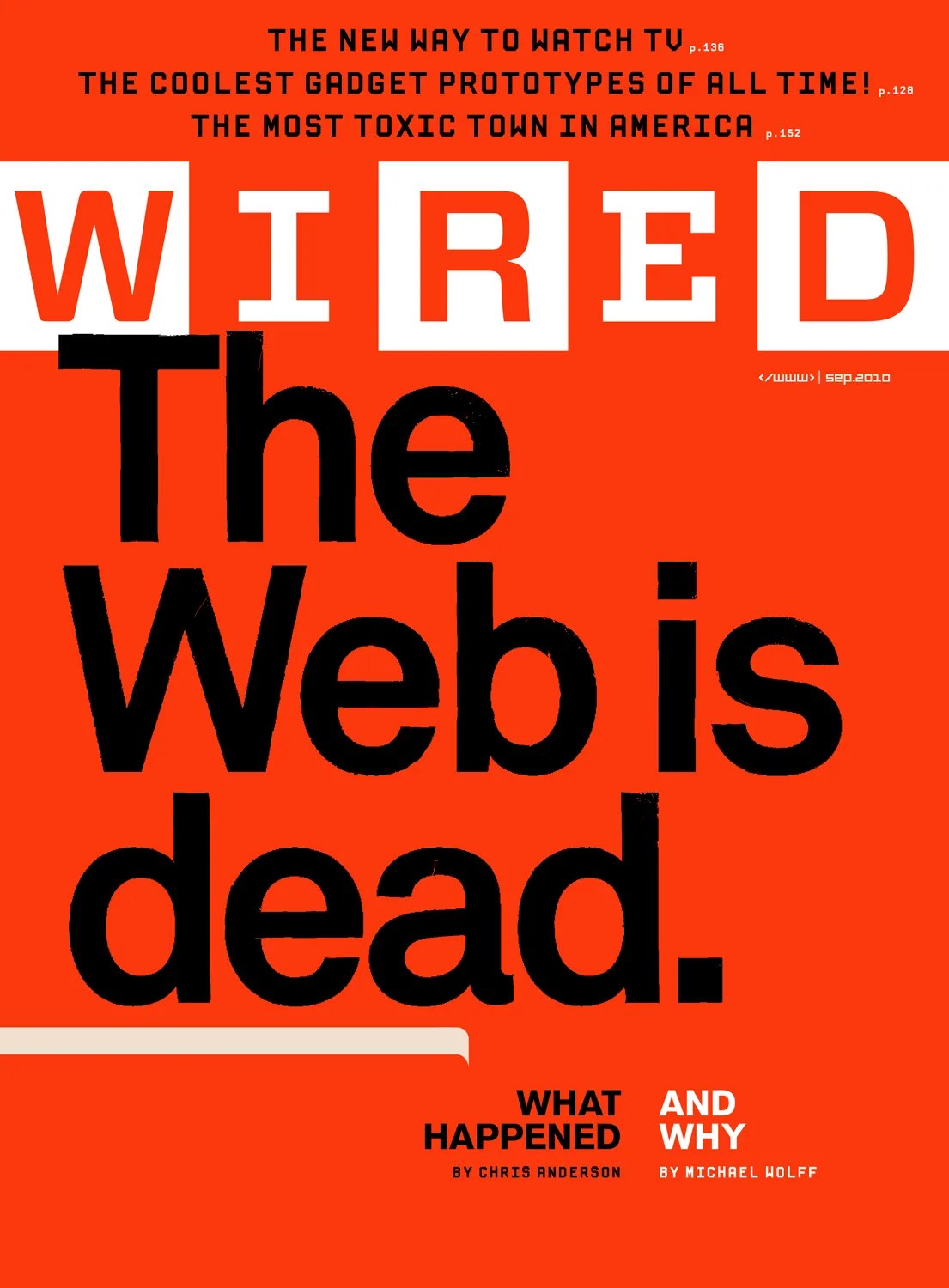
Wired: March 1, 1997: “You can kiss your web browser goodbye” – Kevin Kelly and Gary Wolf, The Big Story
But where are we going?
What if recommendations go from correlation to an understanding of what those SKUs really represent?
You bought packing tape - maybe you need boxes and bubblewrap?
Maybe you’re moving. How about some lightbulbs and smoke alarms?
Here’s an ad for home insurance
Don't forget: The old stuff from before ChatGPT is still here
E-commerce as % US retail sales
‘Retail’ excludes restaurants & bars. ‘Addressable retail’ also excludes cars, car parts & service, and gasoline stations. ‘Core retail’ excludes grocery from addressable retail.
And all the other new stuff
After a decade of promises and tens of billions of dollars, ‘automatic cars’ might be starting to work.
Monthly ‘robotaxi’ trips in California
But general-purpose robots are harder. This is "Moravec's Paradox": high-level reasoning (chess, poetry) requires very little computation, but low-level sensorimotor skills (walking, holding an egg) require enormous computational resources.
We are seeing progress in "Embodied AI"—robots that learn to move by themselves—but we are still far from a Rosie the Robot in every home.
Way More to Come
Waymos are currently ferrying passengers in five U.S. metro areas and testing in more than 20 more.
So what?
We are in the deployment phase. The technology works, the capital is flowing, and the models are getting better. Now comes the hard work of figuring out the product-market fit, the business models, and the societal impact.
When automation works, it disappears
Consider the elevator operator. In 1950, there were over 100,000 elevator operators in the US. Automation (buttons) didn't just remove the job; it made the elevator invisible.
What goes up...
Elevator attendants, USA
“AI is whatever machines can’t do yet”
— Larry Tesler, 1970
Watch Benedict Evans deliver this presentation at SuperAI Singapore 2025: